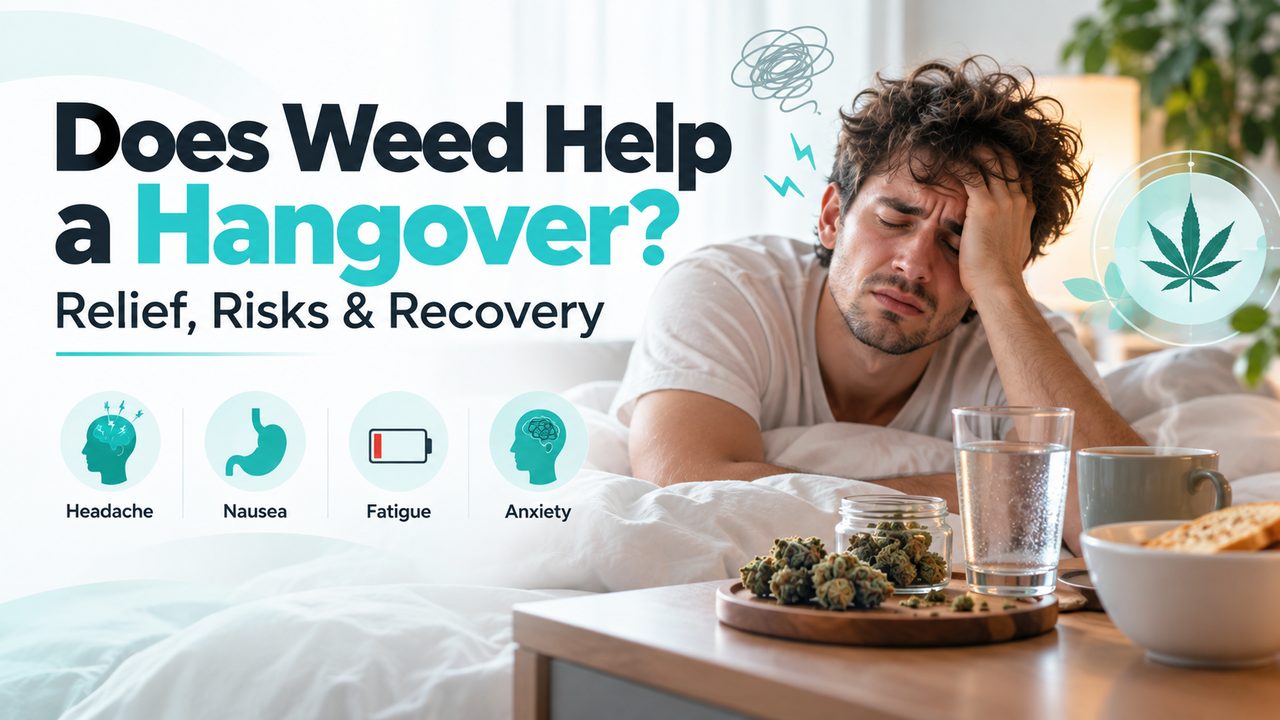
You wake up with a pounding head, an unsettled stomach, and no appetite. If cannabis usually helps you relax, reaching for it might seem like a way to make the morning easier.
Weed is not a reliable hangover remedy. It may make you feel more relaxed or increase your appetite, but that does not mean you are recovering faster. Cannabis can also add dizziness, anxiety, nausea, and impairment to symptoms you already have.
The useful distinction is temporary comfort versus recovery. Feeling different after using cannabis does not mean the hangover has ended.
Why Weed Doesn’t Cure a Hangover
A hangover involves more than dehydration. Alcohol can irritate the stomach, disrupt sleep, and contribute to inflammation. Those effects help explain why drinking water alone does not always make you feel normal again.
Cannabis does not replace lost fluids or undo disrupted sleep and stomach irritation. Your body still needs time to recover. Hangover symptoms can last 24 hours or longer, and there is no proven shortcut that reliably ends them.
Can Weed Help With Individual Hangover Symptoms?
Nausea and poor appetite
Cannabis can increase appetite, so food may seem more appealing after using it. But wanting to eat is different from settling an alcohol-irritated stomach.
Cannabis-based medicines have uses for specific conditions, including certain cases of chemotherapy-related nausea. That does not establish ordinary cannabis as a treatment for hangover nausea. Cannabis itself can also cause nausea or vomiting.
Headache and dizziness
Weed is not a dependable fix for a hangover headache. If you already feel dizzy or unsteady, cannabis can make those problems harder to manage.
Headache, lightheadedness, and loss of balance are possible cannabis side effects. Adding them to a rough morning may leave you feeling worse rather than more comfortable.
Anxiety and restlessness
Cannabis can feel relaxing, but it can also cause anxiety, panic, or a racing heart. Your usual response is not a guarantee of how you will feel on another occasion. If anxiety is already the main problem, THC may add to it rather than relieve it.
What If Alcohol Is Still in Your System?
Do not assume alcohol has cleared simply because you slept or it is now morning. Using cannabis while alcohol is still affecting you can increase impairment and adverse effects. Health Canada advises avoiding the combination, regardless of whether cannabis is smoked, vaped, or eaten.
Cannabis also does not make you sober. Even a hangover without ongoing intoxication can affect attention, decision-making, and coordination. Feeling calmer is not a reliable sign that you can drive safely. Our guide to cannabis and driving covers the driving risks to consider.
Are Edibles or Particular Strains Better for a Hangover?
There is no established cannabis strain or product format that reliably treats a hangover. Switching from smoking to an edible does not turn cannabis into a cure.
Edibles create an additional practical problem: effects may take 30 minutes to two hours to begin and up to four hours to fully develop. Taking more because nothing seems to be happening can lead to overconsumption and a longer period of impairment.
If you choose to buy weed online from a retailer such as Budora for another occasion, compare the stated THC content and serving information. Our guide to reading cannabis labels explains what to look for. Do not choose a product on the promise that it will cure a hangover.
What Should You Do Instead?
For an ordinary hangover, focus on basic comfort while your body recovers:
- Sip water: Take manageable sips, especially if your stomach feels unsettled.
- Try a small, bland snack: Toast or crackers may be easier to tolerate than a large meal.
- Rest: Give yourself time to recover from disrupted sleep.
- Skip more alcohol: Another drink can delay or prolong the problem.
These steps may ease discomfort, but they are not instant cures. Be careful with headache medicines, too. Alcohol and acetaminophen can harm the liver, while aspirin and ibuprofen can irritate the stomach. Ask a pharmacist if you are unsure what is appropriate after drinking, especially if you are vomiting or take other medicines.
When Should You Get Medical Help?
Difficulty waking someone, severe confusion, seizures, or slow or irregular breathing after drinking can signal alcohol poisoning. Call emergency services immediately and stay with the person. Do not assume they can simply sleep it off.
Persistent vomiting or being unable to keep fluids down also warrants medical advice. If hangovers regularly interfere with work, relationships, or daily life, speak with a healthcare professional.
Conclusion
Weed may change how a hangover feels, but it is not a dependable way to end one. It can also worsen symptoms or add impairment. Water, tolerable food, rest, and time are more sensible starting points than adding another intoxicating substance.
Sources & further reading
- Health Canada: health effects of cannabis
- NHS: hangover causes, treatment and prevention
- National Institute on Alcohol Abuse and Alcoholism: hangovers
Health and regulatory guidance change. Check the relevant official authority for the place and date of your decision.
Clear answers
Frequently asked questions
Does weed cure a hangover?
No. Cannabis may make you feel more relaxed or hungrier, but it does not replace lost fluids, undo disrupted sleep or end a hangover faster, and it can add dizziness, nausea or anxiety.
Is it safe to use cannabis while alcohol is still in my system?
It is best avoided. Combining the two can increase impairment and side effects. Health Canada advises against mixing cannabis and alcohol, however it is consumed.
Will an edible or a particular strain help more?
No product format or strain reliably treats a hangover. Edibles are slower to take effect (30 minutes to two hours), so taking more can lead to overconsumption and longer impairment.
What actually helps a hangover?
Water in small sips, a bland snack, rest, and time. Avoid more alcohol, and be cautious with pain relievers after drinking.